A good boat electrical system starts with the loads, then works backwards through energy storage, maximum current, charging capacity, cable size, over-current protection, monitoring, redundancy and the physical installation environment.
This guide is designed for Australian boat owners who want to understand that entire chain, then apply it to a specific vessel, load profile and cruising region.
Marine Lithium Battery Topics Covered
- How many amp-hours does my boat need?
- Is 200Ah enough for a weekend cruiser?
- Is 400Ah enough for Starlink and a fridge?
- Can I run a washing machine from lithium batteries?
- Can lithium run marine air conditioning?
- Should a yacht use 12V, 24V or 48V?
- What size inverter do I need?
- What BMS current rating do I need?
- How much solar should I install?
- Can my existing alternator charge lithium?
- Do I need a DC-DC charger?
- Can I keep my AGM starter battery?
- Is an IP67 battery actually waterproof?
- What happens if salt water reaches a lithium battery?
- Can I connect four batteries in parallel?
- Is one large battery better than several smaller batteries?
- What should I ask a marine electrician before an installation?
- How should I compare marine lithium batteries sold in Australia?
Start with energy, not amp-hours
A battery marked 12.8V 400Ah stores approximately:
12.8 V x 400 Ah = 5,120 Wh = 5.12 kWh
A 25.6V 200Ah bank also stores:
25.6 V x 200 Ah = 5,120 Wh = 5.12 kWh
The amp-hour number is different, but the stored energy is the same.
That is why this guide uses watt-hours and kilowatt-hours whenever systems of different voltages are compared.
Learn Ah vs Wh
Calculate your boat's daily power use
Compare 12V, 24V and 48V
A practical marine lithium system
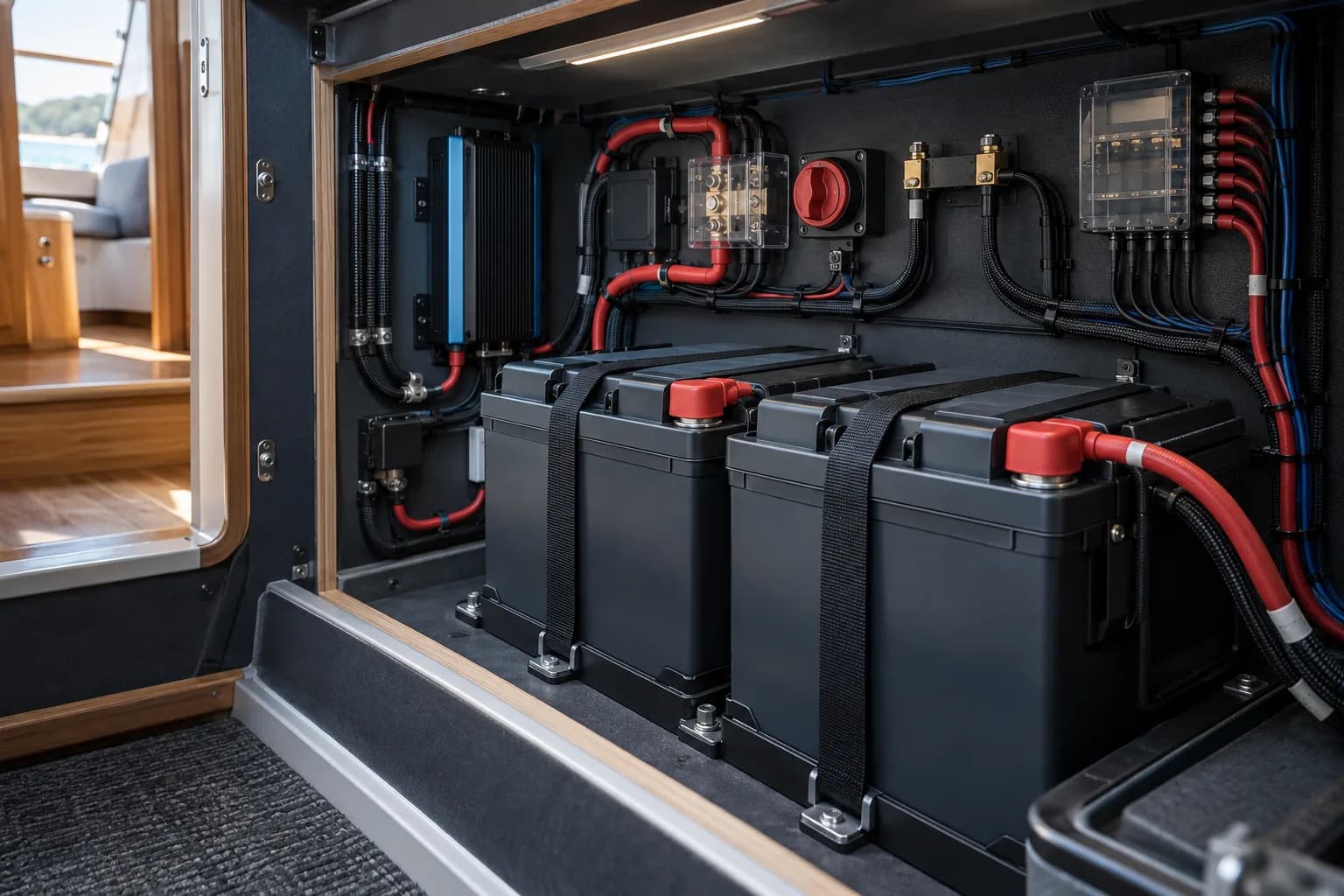
A complete system may include:
- LiFePO4 house battery bank
- Battery Management System
- Main battery fuse or appropriately rated breaker
- Main battery isolator
- Positive and negative busbars
- Battery monitor and shunt
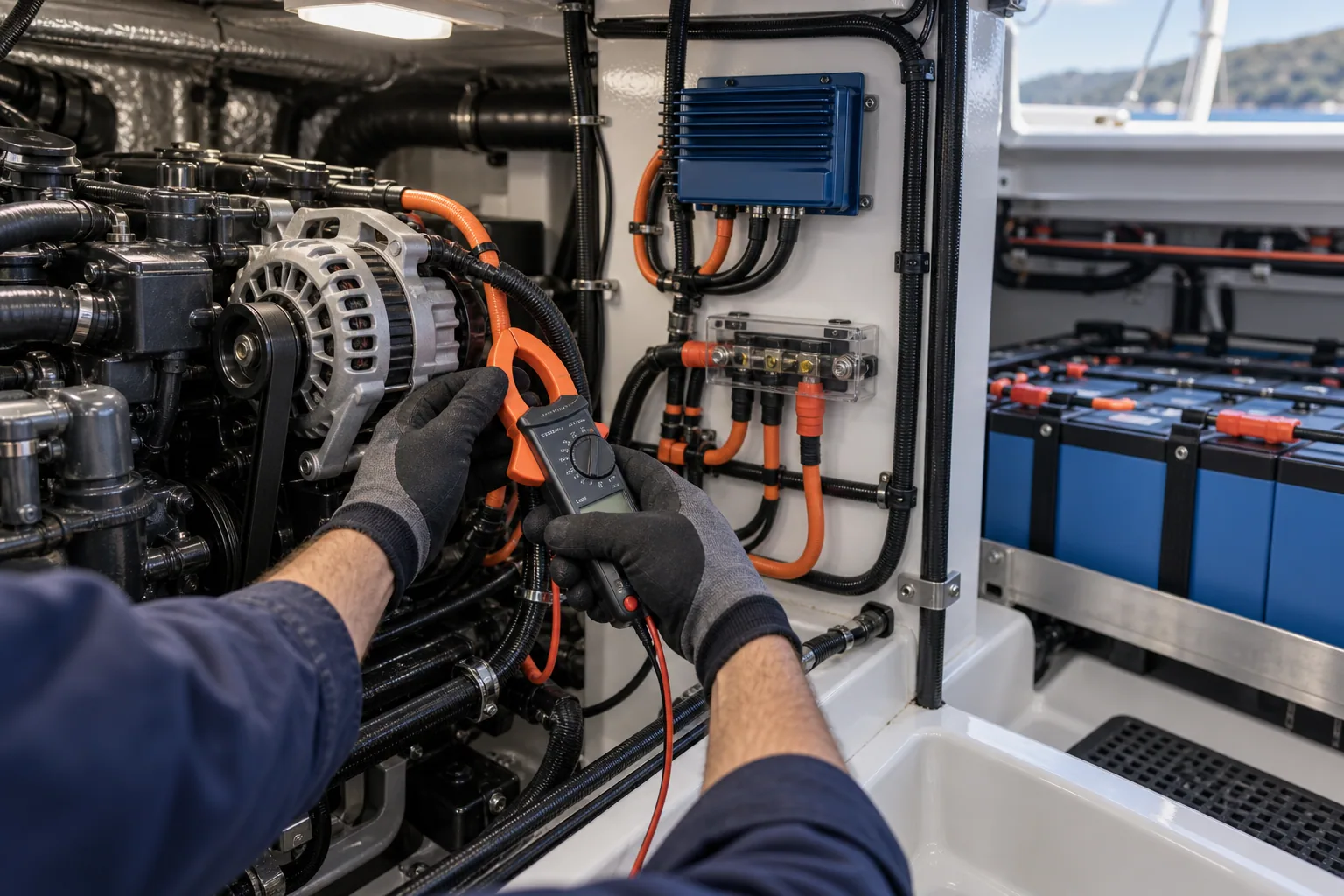
- Alternator charging interface
- DC-DC charger or regulated alternator system
- Solar panels
- MPPT solar controller
- Shore-power charger
- Inverter or inverter-charger
- Generator charging
- DC distribution
- AC distribution
- Alarm and monitoring system
- Temperature sensing
- Correctly sized marine cabling
- Appropriate cable protection and strain relief
- Safe battery mounting and environmental protection
The battery itself is only one component.
Typical boat energy levels
| Boat use | Indicative daily energy | Common battery range to investigate | Typical charging approach |
|---|---|---|---|
| Day sailing / fishing | 0.3-0.8 kWh/day | 100Ah at 12V | Alternator + optional 100-250W solar |
| Weekend cruiser | 0.8-1.8 kWh/day | 200-300Ah at 12V | 300-500W solar + alternator |
| Coastal cruiser | 2-4 kWh/day | 400-600Ah at 12V or 200-300Ah at 24V | 600-1,200W solar + alternator |
| Full liveaboard | 4-8 kWh/day | 8-15 kWh bank | 1,000-2,000W solar + engine/generator backup |
| High-energy liveaboard | 8-15+ kWh/day | 15-30+ kWh bank | Large solar + generator/alternator/hydro |
| Electric propulsion vessel | Highly variable | Engineering-specific | Purpose-designed high-voltage system |
These are planning ranges, not purchase recommendations.
Independent Australian evidence programme
This site separates information that can be verified now from claims that require real products, quotes or installations. It does not publish a “best battery” ranking assembled only from marketing pages.
- Battery testing methodology — how specifications, observations and direct tests are separated.
- Australian price research methodology — how dated retail prices, quotes and invoices will be normalised.
- Installer verification standard — what a directory listing or verified profile does and does not mean.
- Real-vessel case study standard — the loads, costs, commissioning evidence and follow-up required for publication.
The programme is designed to make future comparisons reproducible. Until an evidence threshold is met, the site reports “not tested”, “not stated” or “insufficient data” instead of filling the gap with an assumption.